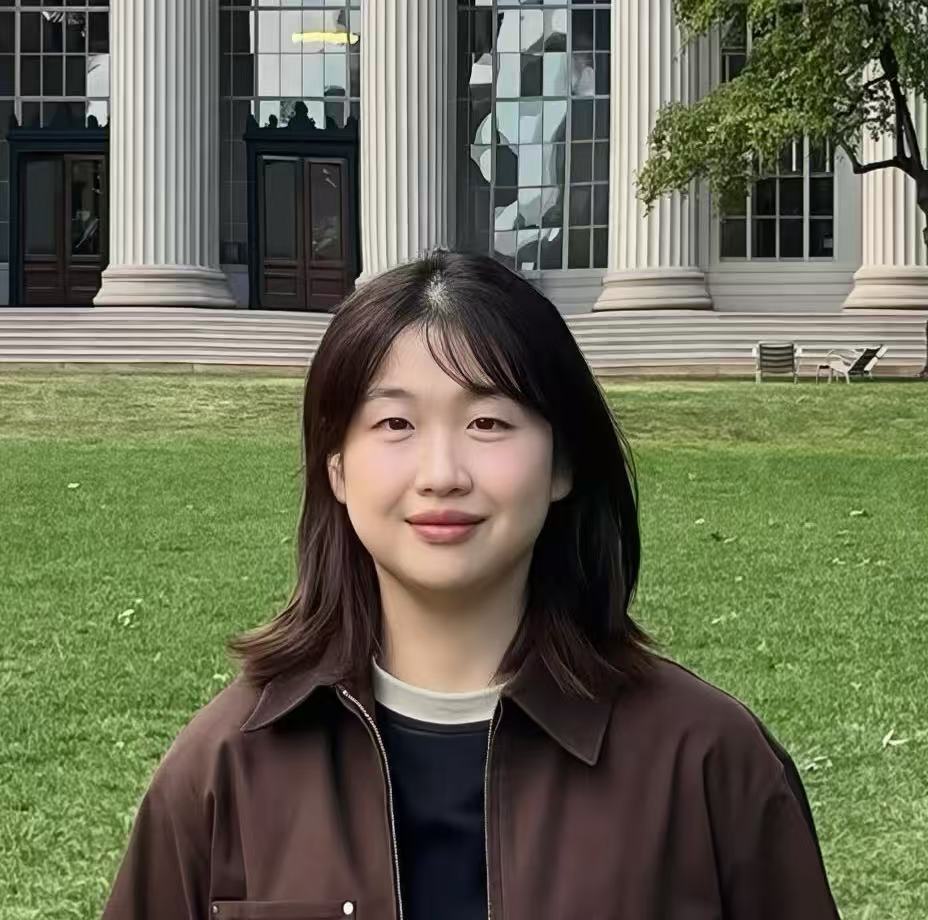
About
About
I am a final-year Ph.D. candidate at KAIST, advised by Prof. Tiantian Chen, and currently a Visiting Ph.D. Student at MIT, working with Prof. Jinhua Zhao.
My research focuses on human-centered AI for intelligent and autonomous systems. I develop adaptive, safety-aware AI assistance that accounts for human needs and environmental context, primarily using intelligent vehicles as a research setting. Beyond system design, I investigate how people interpret and respond to AI, including its implications for human judgment, reliance, and behavior.
At MIT, I am extending this work toward human–autonomy coordination, developing empirically grounded models to understand how people respond and adapt to autonomous vehicles in shared environments.
Research
My research spans three connected levels: designing adaptive AI systems, understanding human responses, and investigating interactions at scale.
01 / Design
Adaptive & Safety-Aware AI Assistance
How can AI determine when to assist, what support to provide, and how to communicate it? I develop personalized AI agents and safety-aware multimodal reasoning methods that integrate human needs, environmental context, and risk. Recent work includes LLM-based personalized driver assistance and severity-aware hazard reasoning through reinforcement learning-based vision–language model training.
02 / Interact
Human–AI Interaction & Behavioral Adaptation
How do people interpret and respond to AI assistance, and how does it affect human judgment and behavior? I examine the behavioral and ethical dimensions of human–AI interaction, including reliance, trust, and decision-making, with ongoing work on human-in-the-loop evaluation.
03 / Scale Emerging Direction
Human–Autonomy in Sociotechnical Systems
How do individual interactions between people and autonomous agents develop into broader patterns of coordination and behavior? At MIT, I am exploring empirically grounded human–agent models to simulate heterogeneous responses to autonomous vehicles. In the longer term, I aim to investigate how repeated interactions and mutual adaptation may influence coordination and system-level outcomes in shared environments.
Selected Publications
- TR-C 2026Large Language Models for Enhancing Human-Machine Interaction in Autonomous Vehicles: A Comprehensive Survey Transportation Research Part C: Emerging Technologies, 2026 · Paper · Code
- IEEE ITS Mag. 2025Personalizing Driver Agent Using Large Language Models for Driving Safety and Smarter Human–Machine Interactions IEEE Intelligent Transportation Systems Magazine, 2025 · Paper
- TBS 2025Where is morality on wheels? Decoding large language model (LLM)-driven decision in the ethical dilemmas of autonomous vehicles Travel Behaviour and Society, 2025 · Paper Outstanding Student Paper Award at the 28th HKSTS International Conference.
- ITSC 2024A LLM-based Multimodal Warning System for Driver Assistance IEEE International Conference on Intelligent Transportation Systems (ITSC), 2024 · Paper
Selected Work in Progress
- Hazard-Reasoner: Safety-Oriented Vision–Language Reasoning for Traffic Hazards Developed a vision–language framework combining structured hazard reasoning with safety-aware reinforcement learning. On 1,050 held-out scenes, the model achieved 90.33% hazard accuracy and improved high-severity recall from 41.25% to 72.50% compared with supervised fine-tuning alone. Research manuscript, 2026 · Project page Best Lightning Talk Award at CICTP 2026.
Selected Honors & Awards
- 2026Best Lightning Talk Award, CICTP 2026
- 2025Outstanding Teaching Assistant Award, KAIST
- 2024Outstanding Student Paper Award (Second Prize), HKSTS
- 2023KAIST Prestige Scholarship for International Ph.D. Students, KAIST